
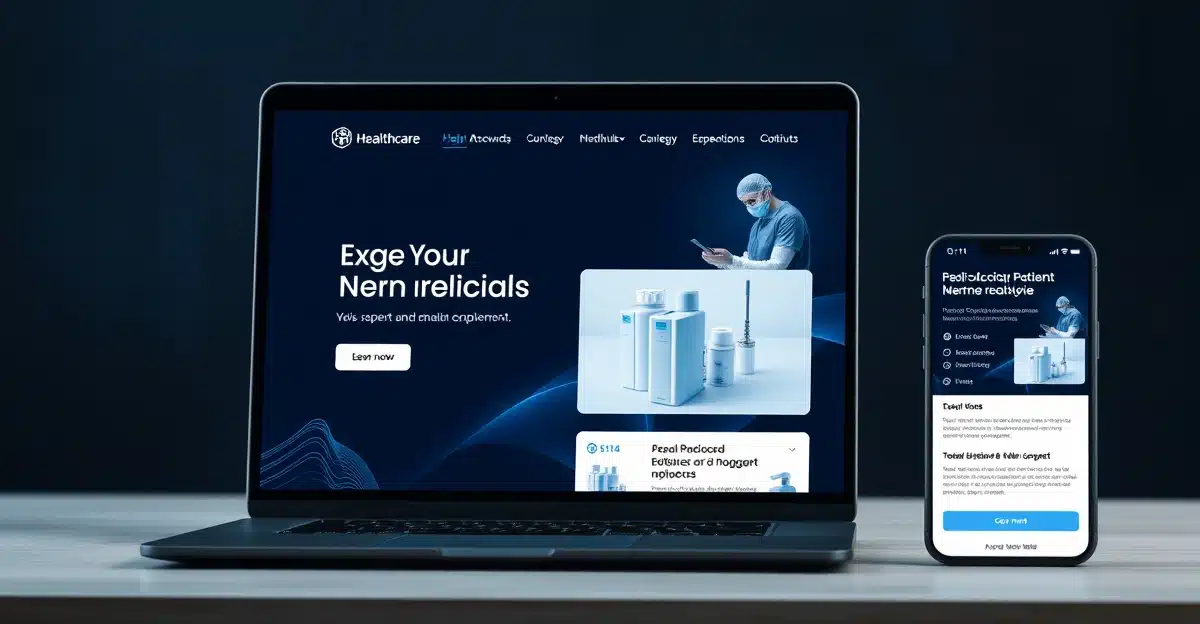
Healthcare website design that builds patient trust before the first appointment is no longer optional — it is a baseline expectation. When someone searches for a new doctor, dentist, or chiropractor, they make trust decisions within seconds of landing on your site. The practices that understand this win new patients consistently. The ones that do not lose them to competitors who do.
This guide breaks down the specific design decisions that convert healthcare website visitors into booked appointments, and why each one matters in 2026.
Ready to build a healthcare website that works for your practice? Contact Nuesion to get started.
Why Your Website Is Your First Impression
Research consistently shows that users form a visual opinion of a website within milliseconds. For healthcare providers, that first impression carries extra weight. Patients are trusting you with their health, and the website is the first signal they have about what kind of care they will receive.
A cluttered, outdated, or confusing website signals the same qualities about the practice behind it. Clean layout, readable typography, fast load times, and clear navigation work together to tell potential patients: “We are organized, professional, and here to help you.”
The opposite is also true. Broken mobile layouts, hard-to-find contact information, and generic stock photography erode trust before a patient ever meets you.
The Trust Signals Every Healthcare Website Needs
Healthcare website design patient trust is not built with one big feature. It is built through a stack of small signals that add up to a credible, professional first impression.
Visible, Accessible Contact Information
A phone number in the site header is one of the fastest trust signals available. When patients can see immediately how to reach you, they feel more confident. They are not hunting for a buried contact page while anxious about a health concern.
- Phone number top-right on desktop, click-to-call on mobile
- Physical address with a map link if you have a location
- Appointment booking button above the fold
Real Provider Photos and Bios
Patients want to know who they are seeing. Professional headshots and honest, approachable bios build a connection before the first visit. Generic stock photos of smiling doctors in lab coats are recognizable immediately, and they undermine authenticity in a field where authenticity matters most.
Patient Reviews and Testimonials
A healthcare website without reviews is a missed opportunity. Integrating Google Reviews, Healthgrades badges, or a dedicated testimonials section lets authentic patient stories answer the questions new visitors are too anxious to ask directly. This kind of social proof consistently outperforms any marketing copy you can write.
Security and Privacy Signals
SSL certificates, visible HTTPS indicators, and a clear privacy policy all contribute to a sense of security online. For healthcare specifically, patients need to know their data is protected. If your practice is HIPAA-compliant, say so clearly. If your contact forms are encrypted, mention it. These small disclosures build the confidence needed to convert a visitor into a patient.
Mobile-First Design Is Non-Negotiable
Over 60% of healthcare website traffic now comes from mobile devices. A patient driving home after receiving a specialist referral, a parent searching from a school waiting room, someone who just left urgent care and wants to follow up with a primary care provider — they are all on their phones.
A healthcare website that is not mobile-optimized does not just create friction. It signals a practice that does not pay attention to detail. In healthcare, that association ends the patient relationship before it starts.
Mobile optimization checklist for healthcare sites:
- Buttons large enough to tap without zooming
- Click-to-call phone numbers that work with one tap
- Forms that do not require pinching or zooming to complete
- Page load times under 3 seconds on mobile connections
- Simple navigation with a clearly visible menu on every screen size
Nuesion builds all healthcare and medical websites with a mobile-first design approach, testing across devices and screen sizes before every launch.
Page Speed and Core Web Vitals
Google uses Core Web Vitals as a ranking factor. More importantly, patients use page speed as a subconscious trust signal. A website that takes 5 seconds to load signals a practice that is behind the times.
Key performance targets:
- LCP (Largest Contentful Paint): under 2.5 seconds
- CLS (Cumulative Layout Shift): minimal layout jumps during page load
- INP (Interaction to Next Paint): fast response to user input
Common fixes for slow healthcare websites: compress and properly size images before uploading, use a CDN with browser caching, remove unused JavaScript and CSS, and choose a lightweight theme. Bloated page builder themes can add hundreds of kilobytes of overhead per page and slow load times significantly on mobile connections.
Healthcare SEO: Getting Found Before Trust Can Even Begin
A well-designed healthcare website that no one finds does not build patient trust. It just exists. Healthcare SEO targets the searches patients actually type: “family doctor near me,” “Houston chiropractor open Saturday,” “urgent care walk-in no appointment.”
Local SEO delivers the highest value for most healthcare practices:
- Google Business Profile optimized with accurate hours, services, and photos
- Local keyword targeting combining city name and specialty
- Consistent NAP (Name, Address, Phone) across all directories and listings
- Schema markup for healthcare providers (MedicalOrganization, Physician, Dentist)
- Location-specific pages if your practice serves multiple areas
Nuesion’s AI-powered marketing strategy includes local SEO built specifically for healthcare providers who need to rank in their service area and convert that traffic into booked appointments.
Accessibility: The Trust Signal Most Practices Overlook
WCAG (Web Content Accessibility Guidelines) compliance is both an ethical responsibility and a practical trust builder for healthcare websites. Many of your patients have visual impairments, use screen readers, or have motor limitations that affect how they interact with digital interfaces. Building an accessible site signals that your practice is inclusive and attentive — exactly the message a healthcare provider should send.
Practical accessibility essentials:
- Color contrast ratios that meet WCAG AA standards (minimum 4.5:1 for body text)
- Descriptive alt text on all images, including provider headshots
- Keyboard-navigable forms, menus, and interactive elements
- Font sizes that scale without breaking layout
- Visible form labels rather than placeholder text that disappears when the user starts typing
Online Booking and Appointment Integration
One of the highest-converting features on any healthcare website is a direct appointment booking tool. Patients increasingly expect to book online the same way they book a restaurant or a flight. Giving them that option reduces friction, increases conversions, and frees up front desk staff from routine scheduling calls.
Options for healthcare practices range from embedded scheduling tools (Calendly, Acuity, Zocdoc widget) to full patient portal integrations with EHR systems. The right choice depends on your practice size and existing software stack. Whatever you choose, make the booking option prominent on every page — not buried in the footer or behind a contact form.
Nuesion specializes in healthcare website design that includes appointment booking integration, HIPAA-compliant contact forms, and patient portal connectivity for medical practices of all sizes.
Bringing It All Together
Healthcare website design patient trust is built through the sum of design decisions: speed, mobile usability, honest content, visible contact information, real provider photos, genuine reviews, accessible design, and seamless appointment booking. No single element does the job alone.
The practices that invest in professional website design consistently see higher new patient acquisition, better retention, and stronger online reputations — because the website does the trust-building work before your team ever picks up the phone.
If your healthcare website is not converting visitors into booked appointments, the fundamentals are worth examining. Nuesion builds healthcare websites from the ground up for trust, speed, and patient conversion. We work with dental practices, med spas, chiropractors, mental health providers, urgent care centers, and more across the Houston area and beyond.
Ready to see what a high-converting healthcare website looks like? Talk to Nuesion today.